The final part of this look back from 2020 to the days when people travelled
It’s our last day in Cambodia. The rain has cleared, so we have a sense of anticipation as we wait to discover today’s adventure. As expected, our new friend, Jimmy the exuberant young taxi driver, is waiting for us long before the agreed time.
We’ve grown fond of Jimmy and trust his judgement. He knows we want to see a little of the ‘real’ Cambodia, but also don’t want to visit any of the sites of the tragic wars that shaped much of the recent past.
“Today,” he announces, “I’ll take you south to the floating village at Tonle Sap Lake. It’s very popular with tourists, but you’ll also see how the lake people live. Do you have some small American dollars?” We wonder at that question, but we know that a US one dollar bill is universally accepted as a tip in Asia, so we’re well prepared.
As we leave the city behind and wind our way along the small dusty road to the lake, Jimmy gives us some ‘sonly’ advice. “When you are on the boat, do not give the man money to buy a bag of rice for the children. It’s a scam. He will keep all the money for himself. And watch out for the children who want you to take their photo with a big snake … and be very careful on the boat with the crocodiles!”
Crocodiles? I’m just about to ask the obvious question when Jimmy slams on the brakes to avoid ploughing into a jumble of people blocking the road.
A man rushes from one of the wooden roadside shacks, carrying a small, injured child. Man, child and a worried looking woman mount a small motorbike and quickly ride away.
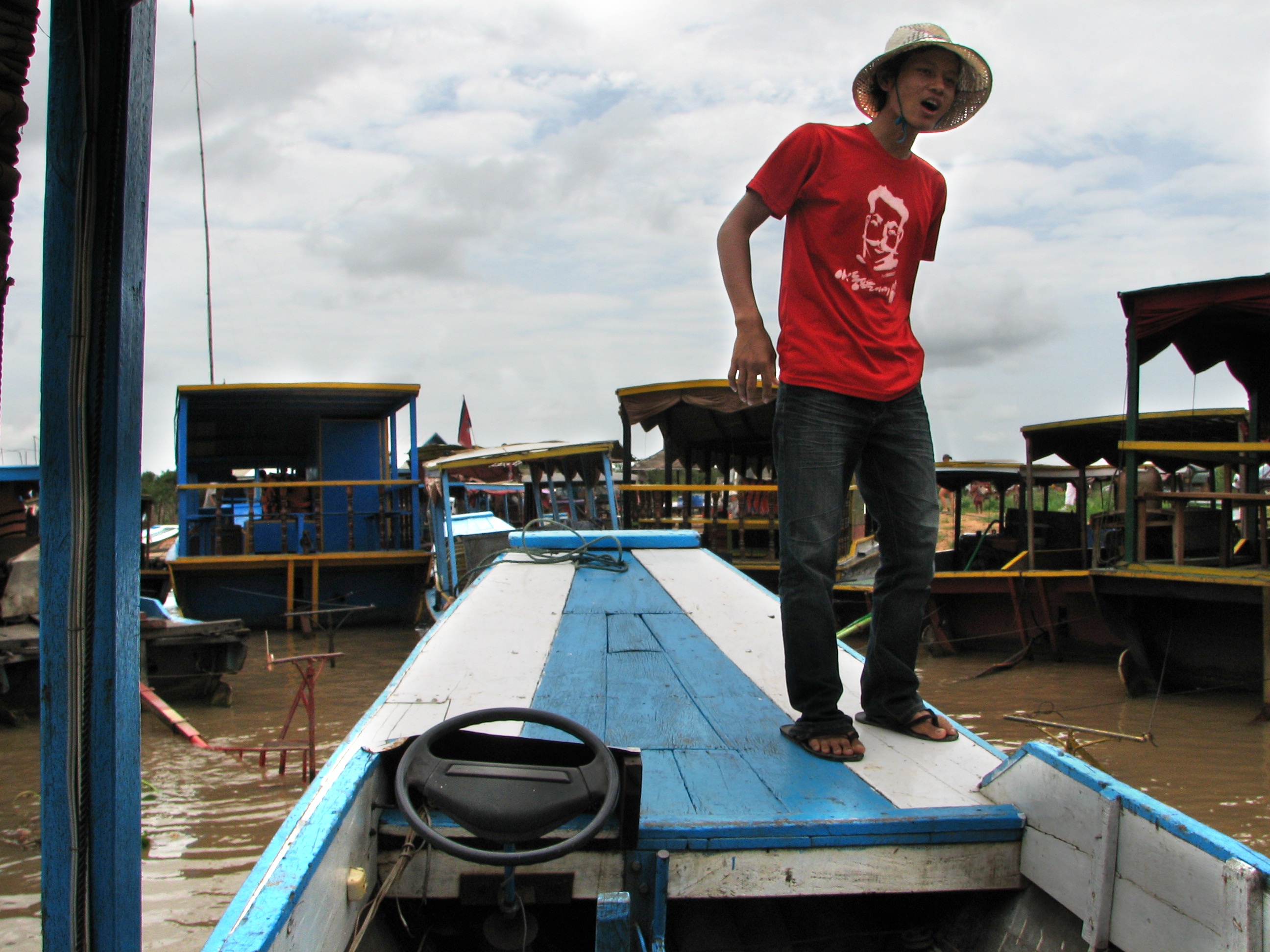
We’re still replaying the little scene in our minds when we arrive at the ‘jetty’ a few minutes later. There’s a loose collection of tourist boats along the shore, but we don’t see any other tourists. We pick a boat at random. “$20US each please. That includes the entrance fee, tourist tax and a visit to the crocodile farm. For $40US extra, you can buy a bag of rice – for the children?”
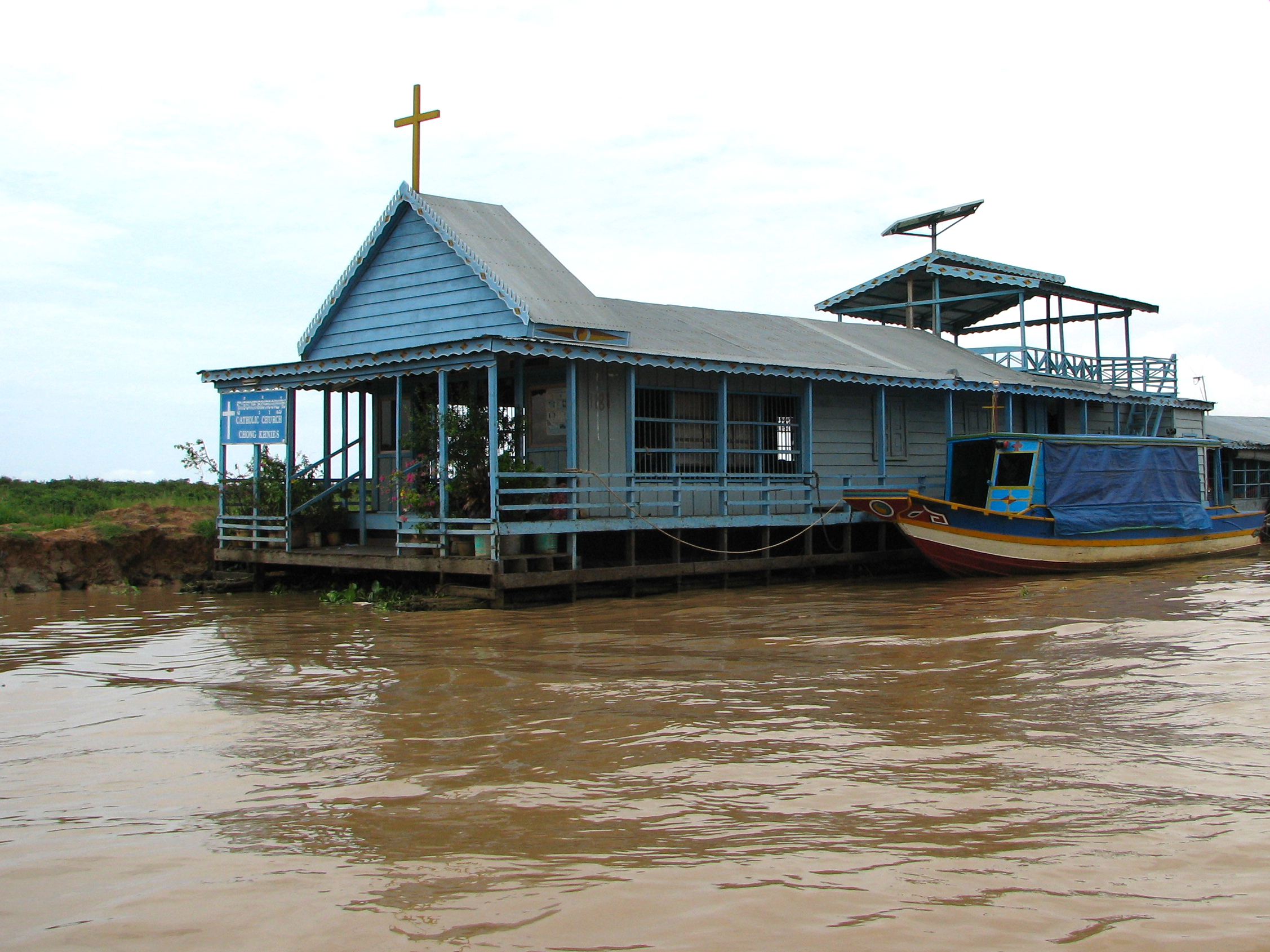
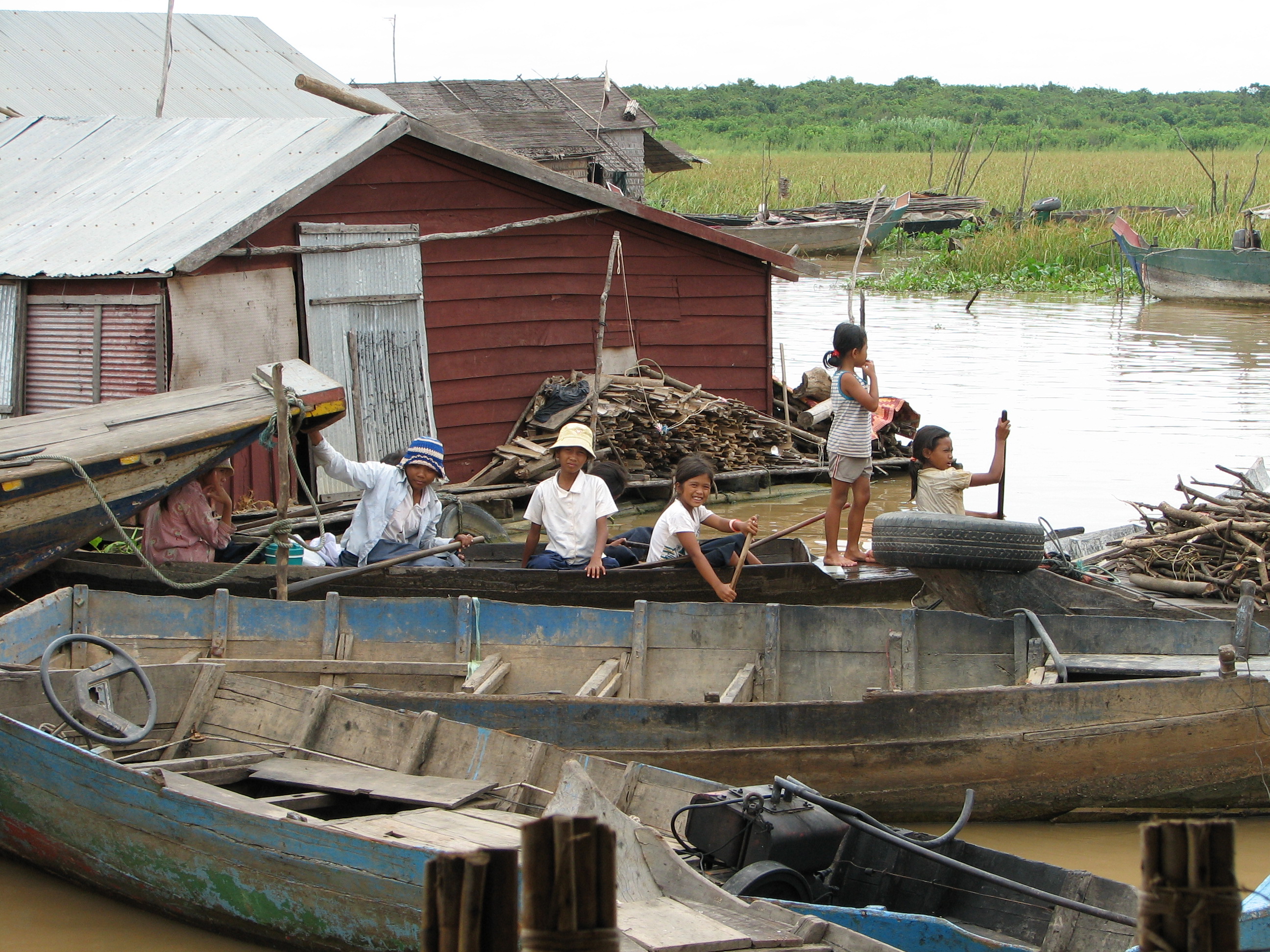
We spend the next hour or so marvelling how the people of the lake have overcome the strict law that prohibits them from owning land in Cambodia, by building houses, workshops, schools and even churches and ‘hair salons’ on semi-permanent rafts. All of these can be moved as the lake swells and shrinks, or the fish that feed their families become harder to find.
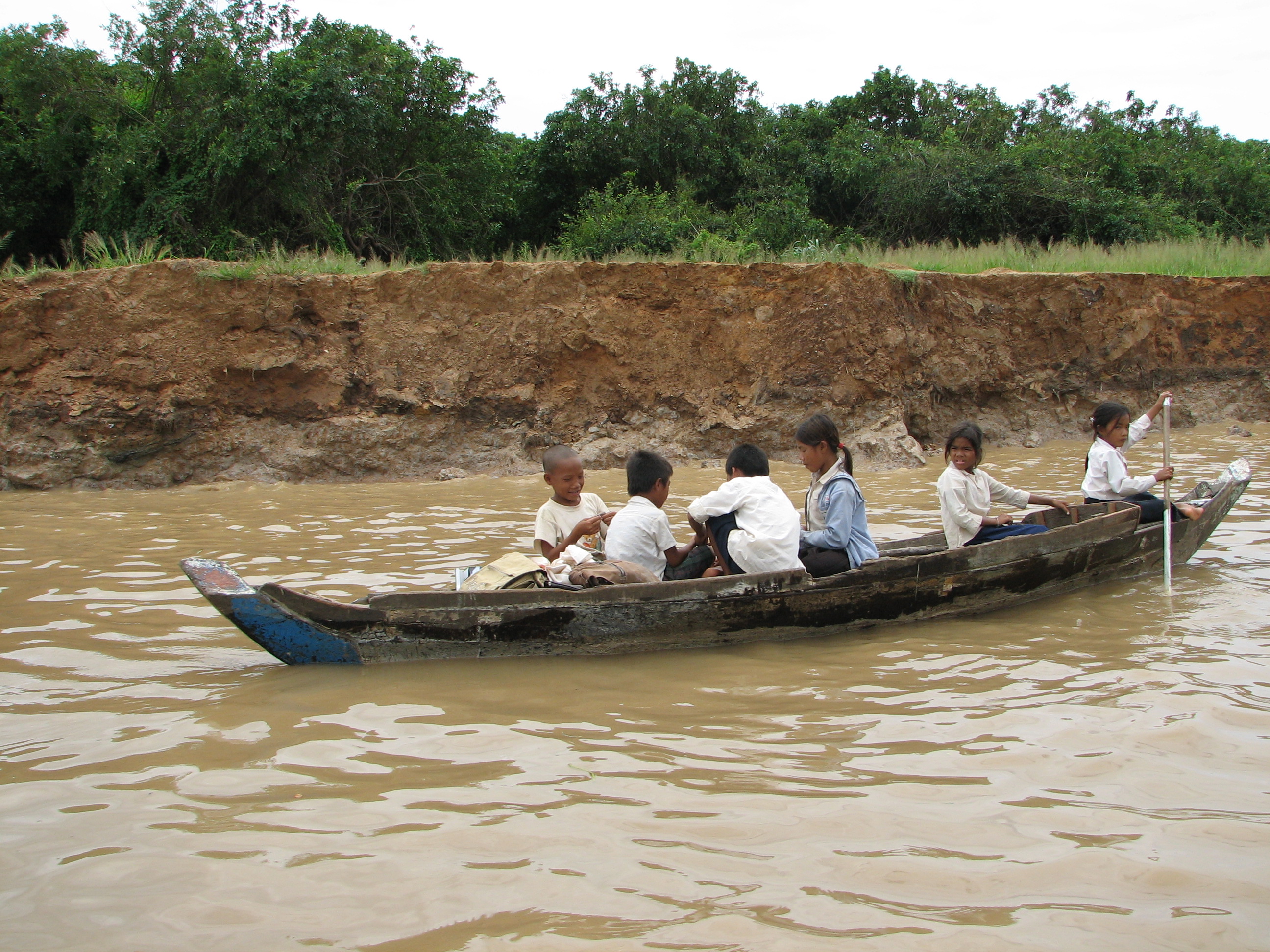
A canoe glides past. It’s filled with children paddling to a floating school. Then, a grubby boy in a small boat comes close. He’s holding a bottle of questionable looking water. “One dollar! One dollar!” he calls. He can keep his water, but we’d happily give him a dollar. Sadly, our boatman has already shooed him away.
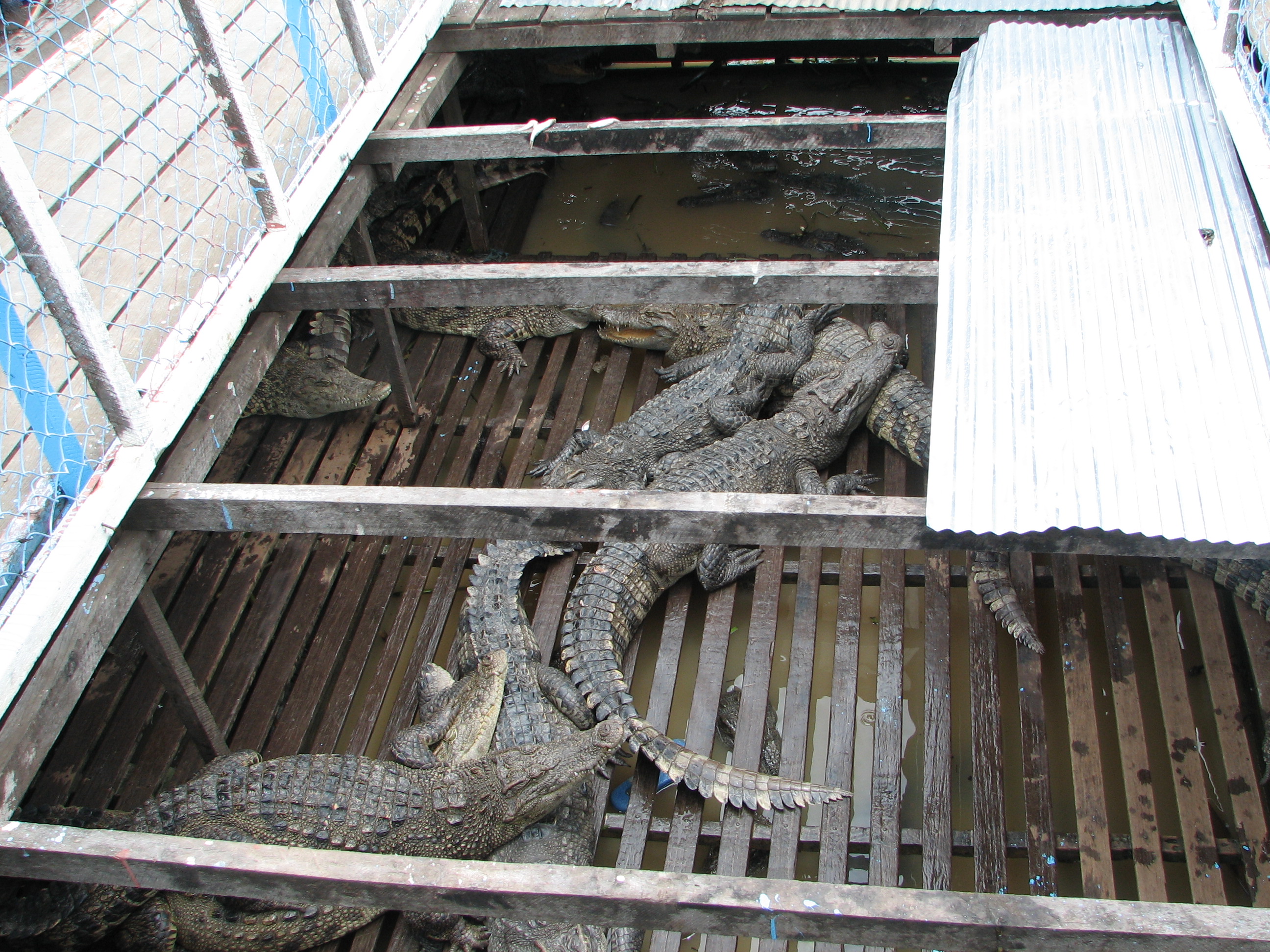
Near the end of the ‘village’, we head towards what appears to be a strange boat made from open wooden slats. A series of empty barrels tied around the perimeter keep it from sinking into the muddy waters. “Crocodile farm”, grunts the boatman as he pulls alongside and throws a frayed rope to a man onboard. We get the message and climb the small ladder onto what could loosely be termed ‘the deck’ – a small wooden platform that holds us, a couple of plastic tables, and what appears to be a sleeping area. The remainder of the space where the deck should be is just open air above a ‘hull’ full of crocodiles. We didn’t need Jimmy’s warning to be careful here. With no sign of a handrail between us and hundreds of very sharp teeth, we’re definitely stepping carefully indeed. “Sit please,” says the man, “I have drinks for you while you watch the crocodiles.”
The cool drink is refreshing, and I take the chance to grab a few pictures of nearby boats, while more chants of “One dollar! One dollar!” float across from the small boats that circle just outside the reach of the ‘farmhands’. Then, a sudden commotion of loud snaps and angry tail swishes below us suggests it’s time to go.
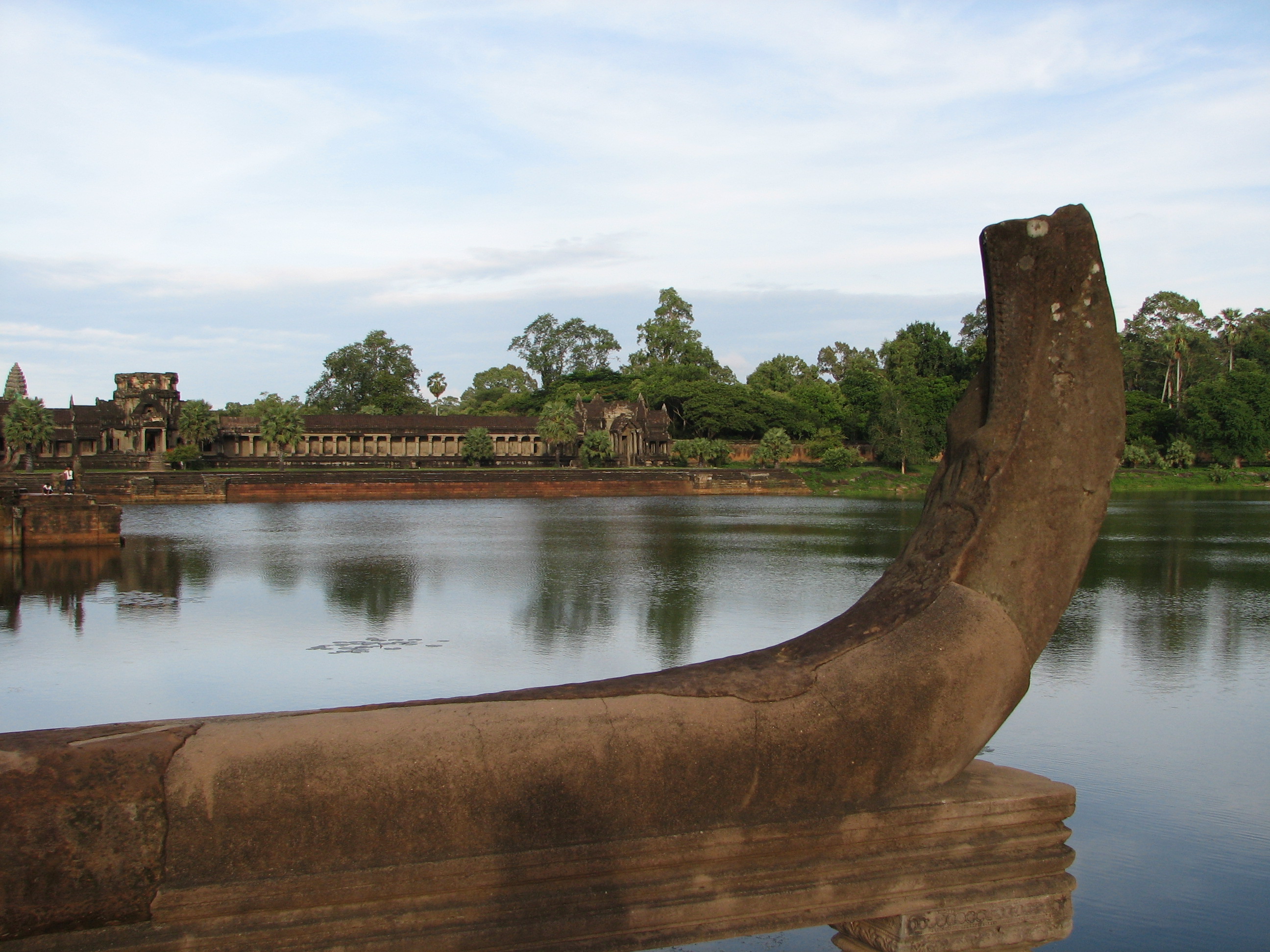
When we get back to our launching point, the ever-reliable Jimmy is patiently waiting to greet us. He starts to ask how we enjoyed our tour, then, as if sensing our sombre mood, says brightly “Now, I will take you back to Angkor Wat. It’s not raining, so you can take some good pictures this time.” Then, his smile widens even further as he asks, “Have I told you about my dream to be a farmer?”
As we drive back to the Wat, and later to our hotel, Jimmy tells us about his plans to marry one day, sell his taxi, and buy a small farm in the mountains.
“I want to grow almond trees! That would be a good life. I can just plant my trees, then they grow the almonds all by themselves. Yes – that would be a good life!”









 LamondG