It’s a hot, dry Saturday morning and Nanette and I are off to tour the little country town of Haden.
For those of you who haven’t been there, Haden is about thirty miles north-west of Toowoomba. It was described in a 1914 article in the Darling Downs Gazette as “one of the most beautiful spots on the Darling Downs” – which is true. The Gazette also claimed that “one day it will become famous as a tourist and health resort” – which, unfortunately, was only a dream.
Haden’s other great claim to fame is it’s the nearest town to Djuan, where two young Scottish immigrants decided to start their new life as Australian farmers in 1910. And today, a group of their aging descendants are gathering from far and wide for a tour of the ancestral family seat.
My watch shows 9:00 AM as approach the ‘Haden city limits’. Nanette sounds concerned. “What if we can’t find the Community Hall? The tour leaves from there at ten, so we only have an hour.” Since there are only two or three streets in the whole town, I’m pretty confident we’ll be ok.
Precisely an hour later, a large party of Nanette’s extended family is climbing the steps onto the bus. We all move fairly slowly, partly because everyone has consumed way too much of the generous home cooked morning tea delights provided by the locals, but mostly due to bad knees and other issues that make older age so delightful.
Our guide, cousin Graham Campbell, immediately starts his commentary.
“To our left, you’ll see an empty paddock where the Catholic Church used to be. It burned down a few years back.”
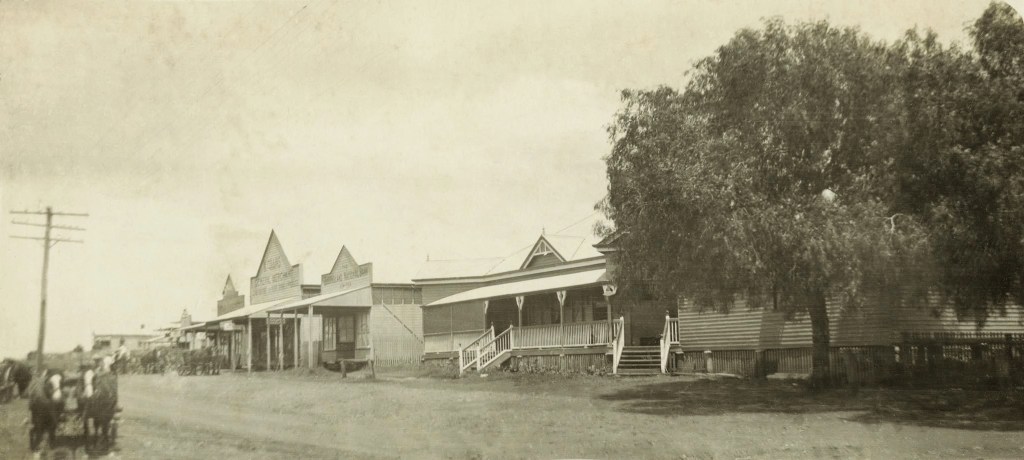
“On the right is the spot where the butcher shop used to be, and just over there is where one of the big pubs used to be, before it burned down.”
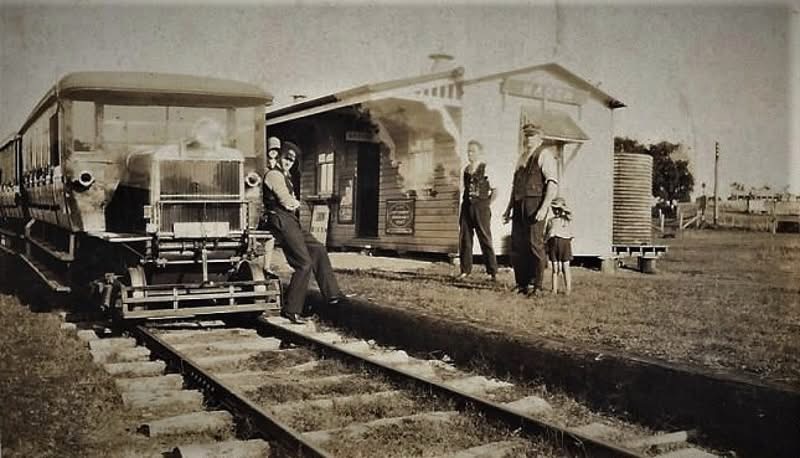
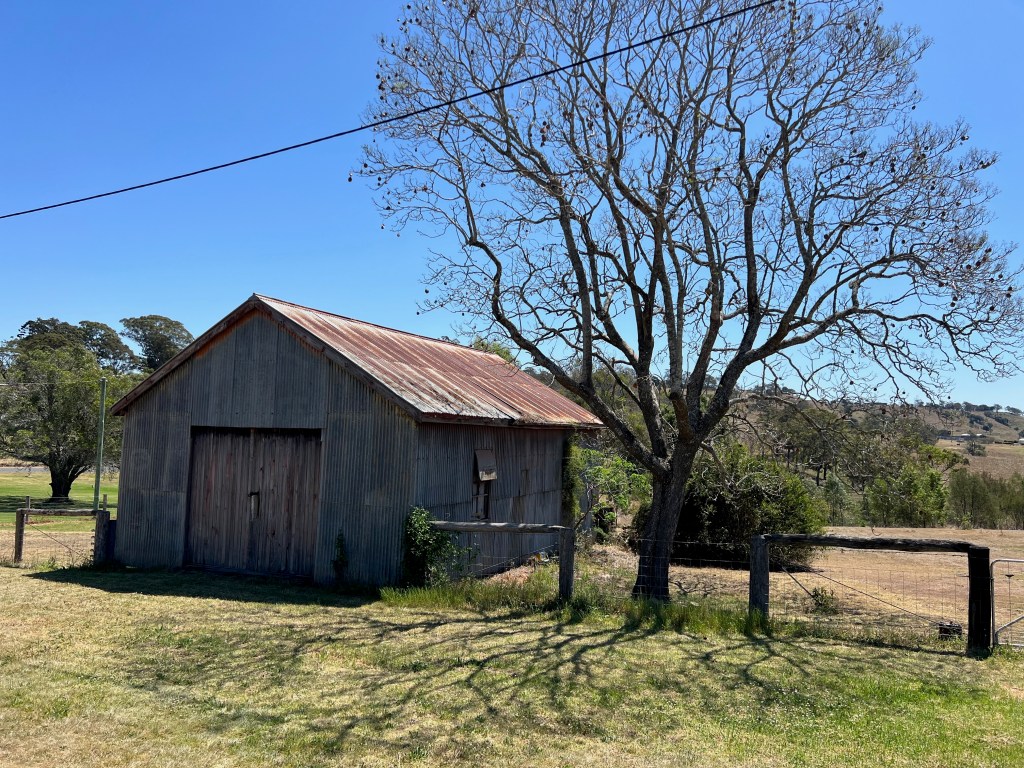
We drive around both streets, seeing where the National Bank, railway siding and another pub “used to be”, then, much to our surprise, see the old blacksmith’s shed is still standing. A last look at the memorial park, and the town shop that’s “open sometimes”, and then we’re off into the countryside.
There’s a general buzz of conversation as Graham points out routes that the group’s parents and grandparents would have followed to ‘town’, the railway siding or the pub. Pictures form in our minds of men in baggy breeches and women in simple dresses trudging or riding along the dusty tracks, carrying provisions for the next month.
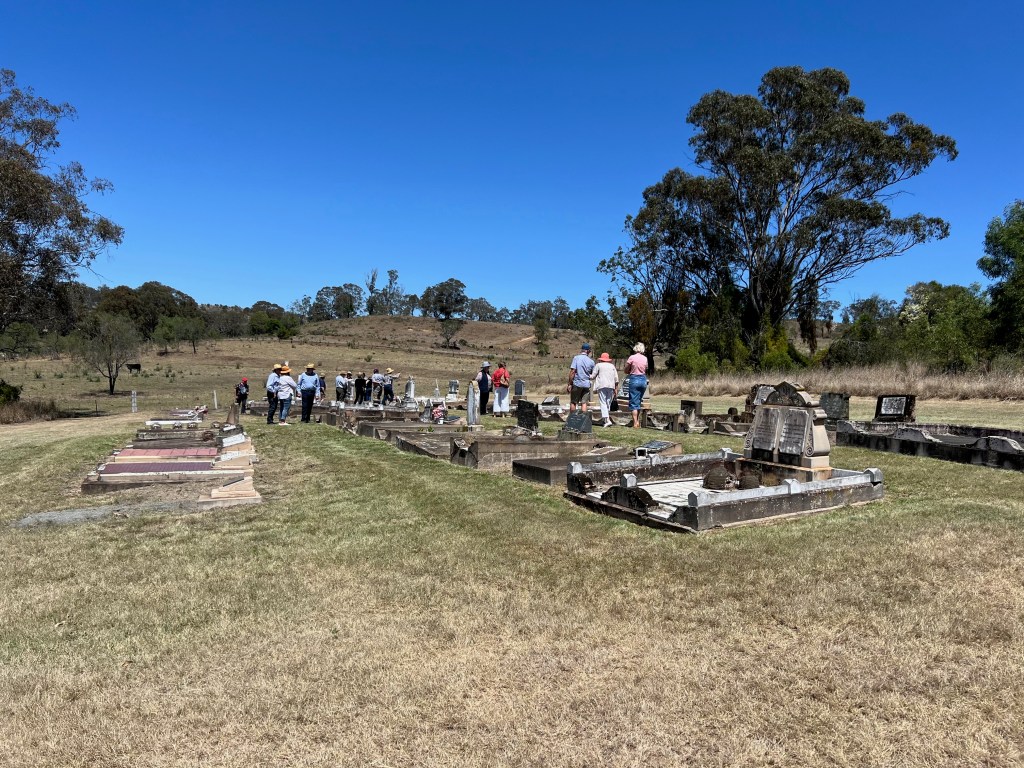
Graham calls a stop at the small Bergen cemetery, a quiet spot watched over by fields of grazing cattle, before moving on to the main event, the old family farm.
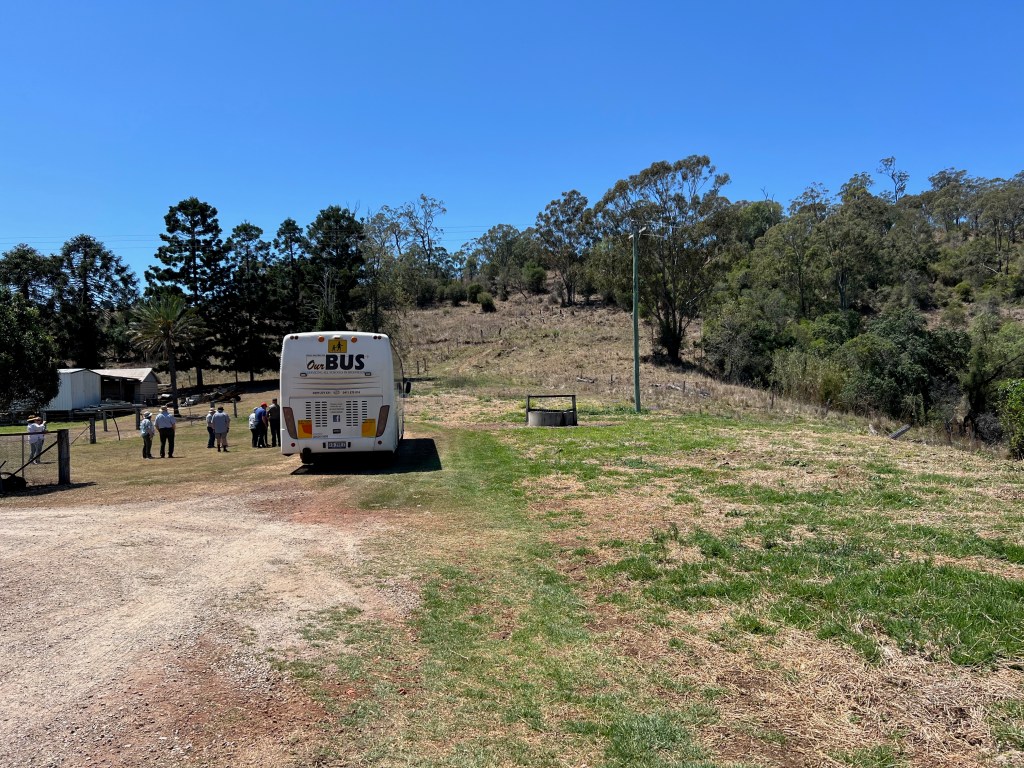
I’m not sure what I expected, but the farm nestled between steep rolling hills and a dry creek seems like a tough place for James and Grace Campbell to choose to raise cattle and their famous Clydesdale horses. Tour guide Graham explains. “Grandad picked this spot because there was oats right up to his waist. He was a short man, so I guess them oats weren’t all that high after all.”
The tiny farmhouse where James and Grace raised their ten children is long gone, but the hills and rocks where they walked and worked are unchanged. As I look around the faces of the group, I can feel their thoughts. “Our grandad used to climb that slope to round up the cattle” – “The boys would have travelled that track when they took the Clydesdale stallions to ‘visit’ the far away farms” (side note: Nanette’s dad, Ian Campbell, left school at 13 to ‘travel the stallions’ with his older brothers) – “It must have been tough for grandma if the creek flooded while grandad and the big boys were away.”
When we finally board the bus to leave the farm, I reflect that Haden may be a town where three pubs, a butcher shop, some churches and a rail siding “used to be”, but the town, this land, and the legacy of the people who lived here, goes on.


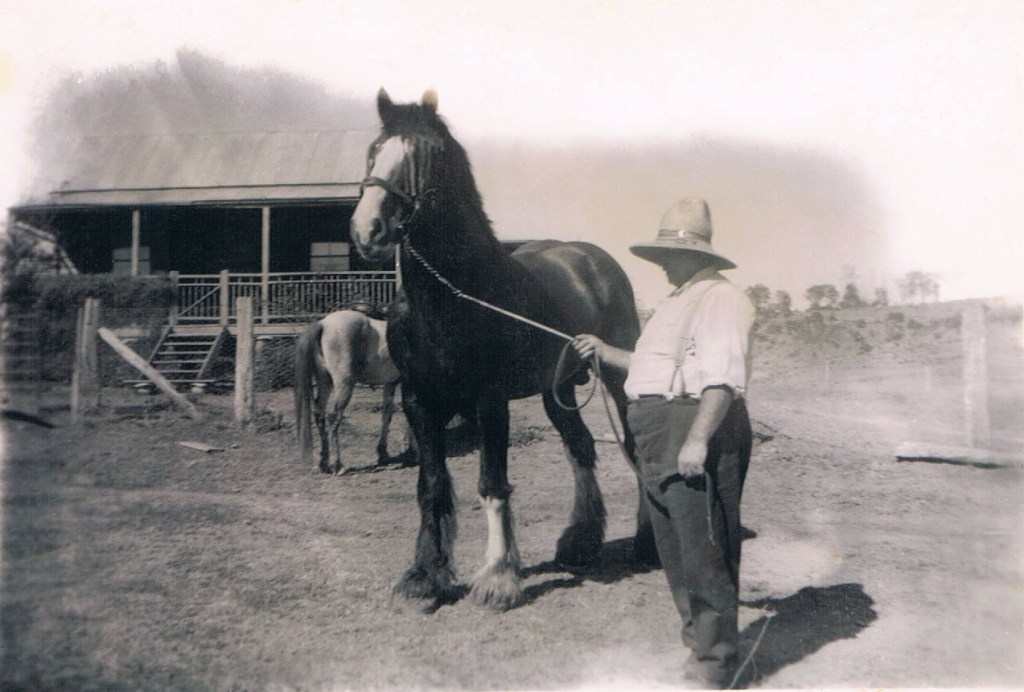
James Campbell’s Clydesdale stallions travelled far and wide across these hills.
 LamondG